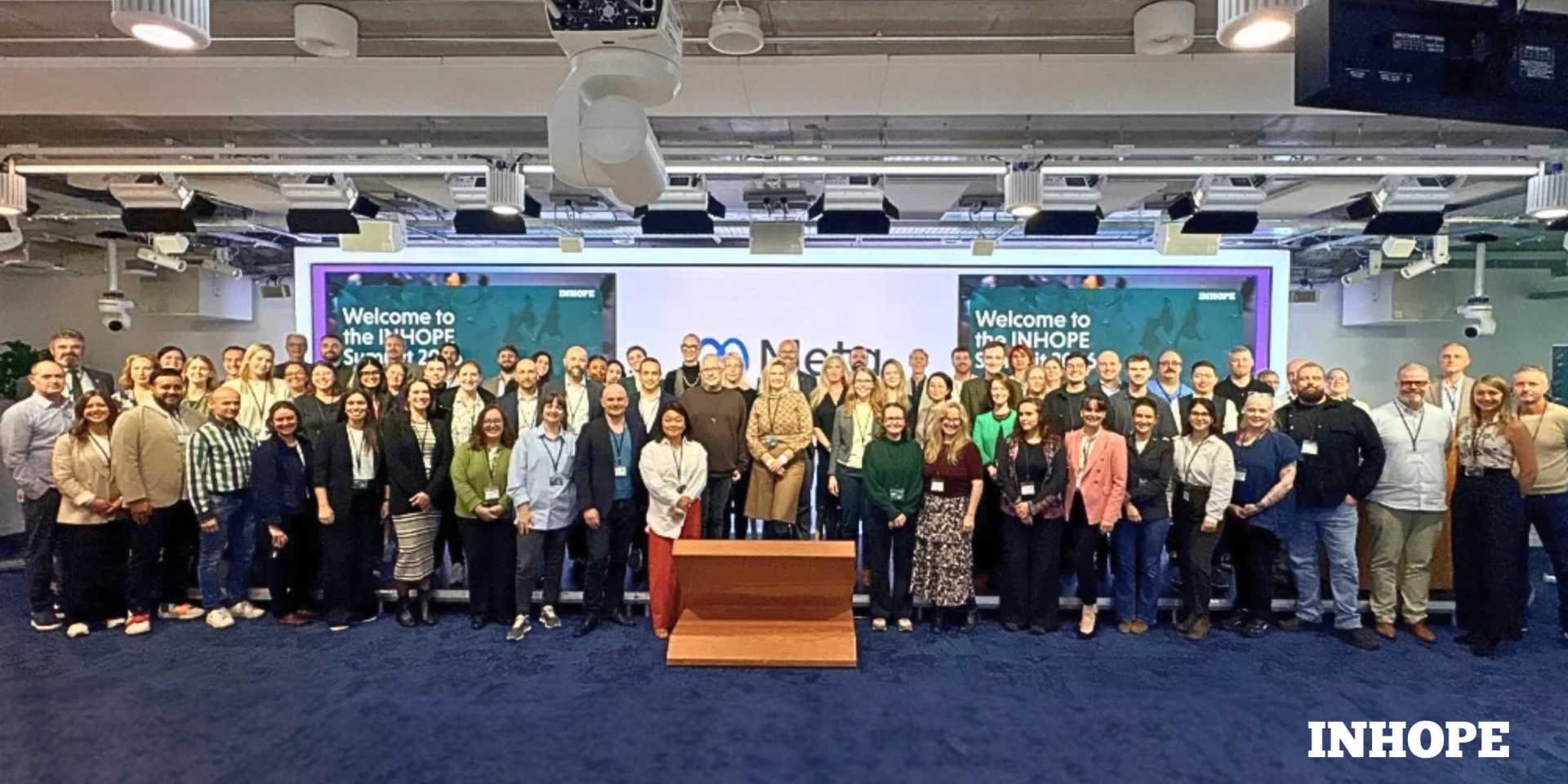
How can we protect children online when harm crosses platforms, borders and industries? This was the central question at the ninth INHOPE Summit, Pathways to Safer Systems, hosted by Meta at its Dublin headquarters.
How can we protect children online when harm crosses platforms, borders and industries? This was the central question at the ninth INHOPE Summit, Pathways to Safer Systems, hosted by Meta at its Dublin headquarters.
The Summit brought together 114 participants in person across two days, with approximately 150 more joining online on the first day. More than 80 organisations were represented, spanning child protection, technology, law enforcement, regulation, finance and research.
One message stood out: no single organisation can tackle online child sexual exploitation alone. Offenders move between platforms and services, while those working to protect children often see only part of the picture. Effective protection depends on connecting prevention, detection, reporting and investigation so that action can keep pace with harm.
Online harm rarely fits into one category. Contact with a child can escalate into sexual extortion, coercion or other forms of abuse, while offenders exploit gaps between services and systems.
Participants called for closer cooperation between child protection, counter-terrorism and cybercrime specialists, alongside earlier support for vulnerable young people.
The takeaway: We must look beyond individual types of harm and work together to identify risks before they escalate.
Removing harmful content remains essential, but we also need to prevent harm before it occurs. MEP Brando Benifei highlighted that hotlines exchanged more than 4.7 million records of suspected child sexual abuse material (CSAM) last year, more than four times the previous year's figure.
Meanwhile, Project Intercept, presented by the Lucy Faithfull Foundation, showed how online warnings and links to confidential support can reach people searching for child sexual abuse material and offer an opportunity to change course.
The takeaway: Success means not only removing harmful content, but also measuring whether interventions prevent harm in the first place.
A hotline may identify harmful material, a bank may notice suspicious payments, and law enforcement may hold information about an investigation. Together, these pieces can reveal a clearer picture.
A Danish pilot involving Save the Children Denmark, Danske Bank and the police demonstrated how shared indicators can help banks identify suspicious activity more effectively. Technology companies also highlighted the value of better reporting, collaboration with hotlines and feedback from investigators.
The takeaway: Responsible information-sharing helps organisations act earlier. Closing the feedback loop also enables them to learn what happened after a report was submitted.
Generative AI is lowering the barriers to creating harmful material, but it can also help moderators and investigators identify serious cases more efficiently.
As harmful activity moves between AI tools, platforms and hosting services, no single provider sees the whole picture. Participants stressed the need for safety information to travel between services, supported by skilled professionals who can assess it and act.
The takeaway: Technology can support child protection, but effective safeguards require cooperation, human expertise and action across systems.
Different reporting formats, definitions and legal requirements can prevent information from reaching the right people. Participants called for more consistent approaches, including INHOPE's Universal Classification Schema, now used in 68 countries.
Regulators also emphasised the value of working with hotlines and other trusted organisations, while a practical design session explored ways to address gaps in reporting, responsibilities and feedback.
The takeaway: Shared definitions and reporting standards are essential infrastructure for effective cooperation.
Across the Summit, several priorities emerged:
Looking ahead to 2027, the challenge is to turn these connections into action. Every organisation can start by aligning its reporting practices, agreeing on how to share outcomes, identifying opportunities to prevent harm earlier and bringing new partners into the conversation.
Protecting children online requires more than individual safeguards. It requires systems that work together, information that reaches the right people and action that starts before harm escalates.
Safer systems are built when we take responsibility not only for our own part, but also for the gaps between us.
